Anglesea History
The Wadawurrung people lived in the Anglesea area for thousands of years. The place was named Kuarka Dorla (fishing place – mullet).
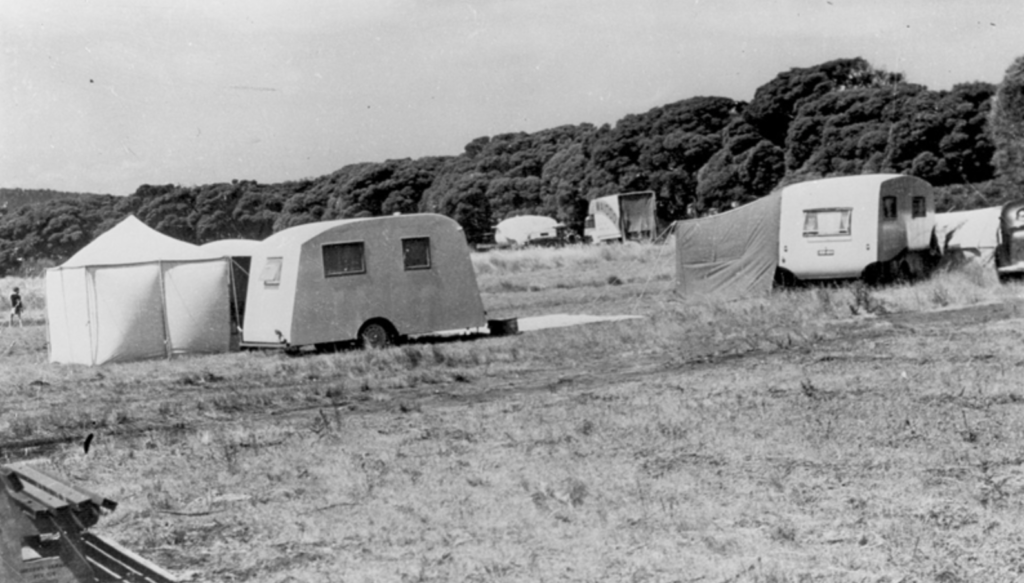
It wasn’t until the 1860s that the region was really noticed by white settlers for its fresh fish and good timber. Originally called Swampy Creek and later Anglesea River, the area was popular for sports parties who camped along the river and hunted or fished.
The first land sales were held in the early 1880s. People who came for sport purchased land. Soon the first guest and boarding houses were built to cater for holidaymakers. A large complex run by Alice Jackson stood where the Anglesea Hotel now stands looking over the town and river.
Timber boatsheds were built along the Anglesea River, and timber bathing boxes were popular along the dunes in the early 1900s. These were built by the families who owned property in the town.
Two ships struck reefs along the rugged coastline. The Hereford, an iron clipper, was wedged on a reef just off Point Addis in 1881. In 1902 the Inverlochy, a three-masted barque, was abandoned off Ingoldsby Reef that now forms part of the National Marine Park.
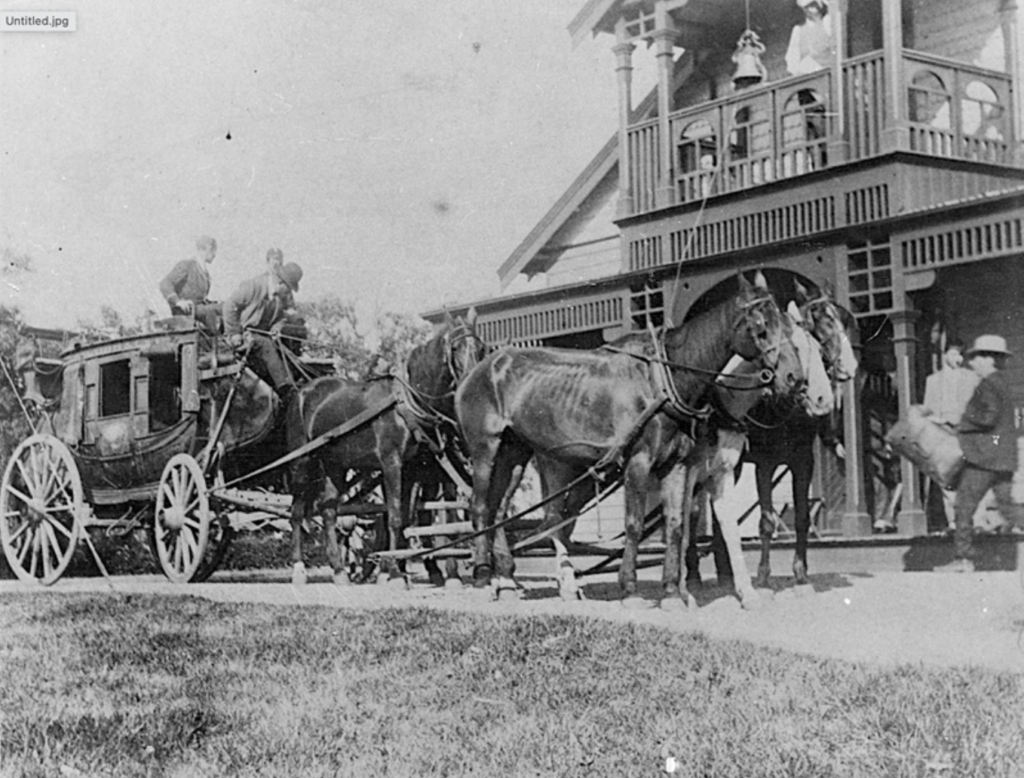
Anglesea was an important stop on the Cobb & Co run. Form 1917, the company provided a mail coach service from Geelong. Hasty’s coach provided a connection to Aireys Inlet. The service ceased in the mid-1920s with the popularity of the motor vehicle.
The primary school was opened in 1927. A new modern one was built further along Camp Road in 2011.
After WW1, Anglesea started to flourish with the town being a hub for the construction of the Great Ocean Road. Forestry became one of the town’s biggest industries with the beginning of pine plantations. Brown coal was found in the area in the 1960s, and in 1968 an open cut mine was set up along with a power station to service the Point Henry Alcoa Aluminium Works on Corio Bay.
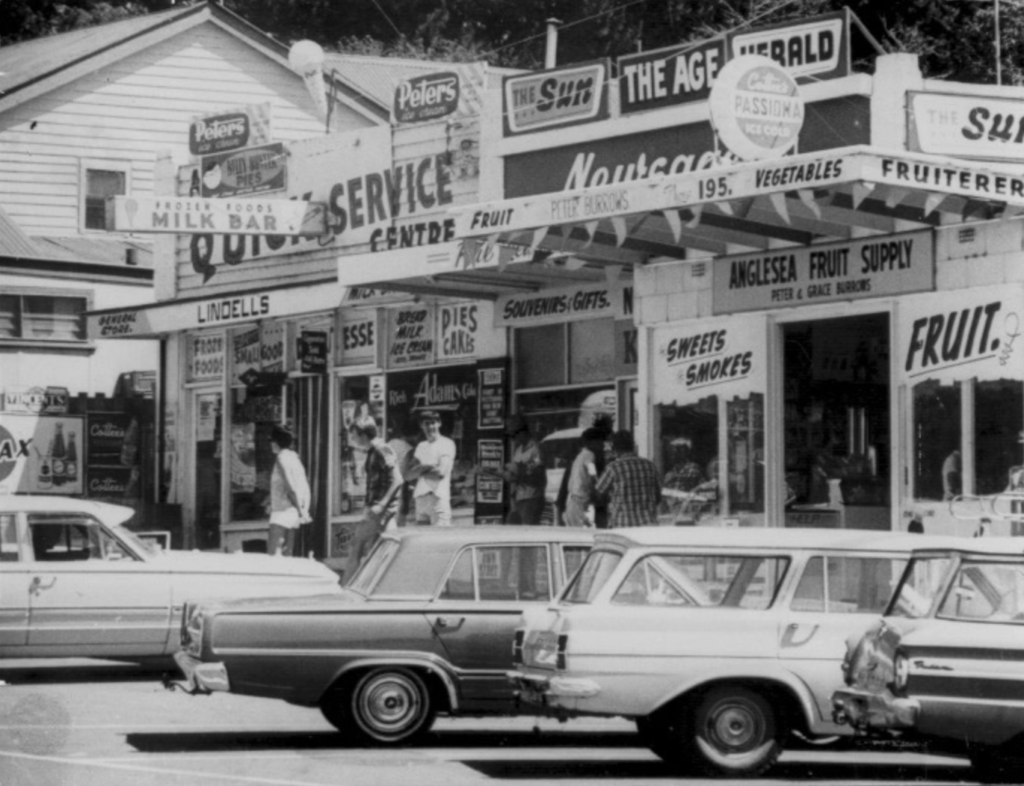
Anglesea went from strength to strength and became one of Victoria’s premier summer holiday destinations. Tragedy struck the Great Ocean Road and much of the bushlands on 16 February 1983 with the horrific Ash Wednesday fires. Anglesea has a history of devastating blazes but the Ash Wednesday fires were the worst. Over 140 homes were lost along the coast and several people were killed.
The Memorial Hall was opened in 1954. The Senior Citizens hall, the Community House, the Art House, and the Bush Nursing Service followed. ANGAIR was started in 1969 by Edith Lawn to protect the native flora and fauna. Many of these facilities are on the community precinct as is the Community Garden that commenced in 2008. In 2012 a modern Country Fire Authority facility was built.
Churches include Catholic built 1980, Anglican built 1957, Uniting rebuilt 1992, and Baptist. The Baptists have an opportunity shop opened in 2004.
Anglesea has excellent sporting facilities. The tennis club commenced in 1930, the bowling greens were built in the 1950s. Two ovals for cricket, and football and netball courts are in Ellimatta Road. The golf course, opened in 1953, is well known for its resident kangaroos as well as its outstanding facilities. The Surf Club has been operating since 1952, providing safety at the main beach.